

What Is A Blue Moon?
The once in a blue moon occurance is more common than we think.
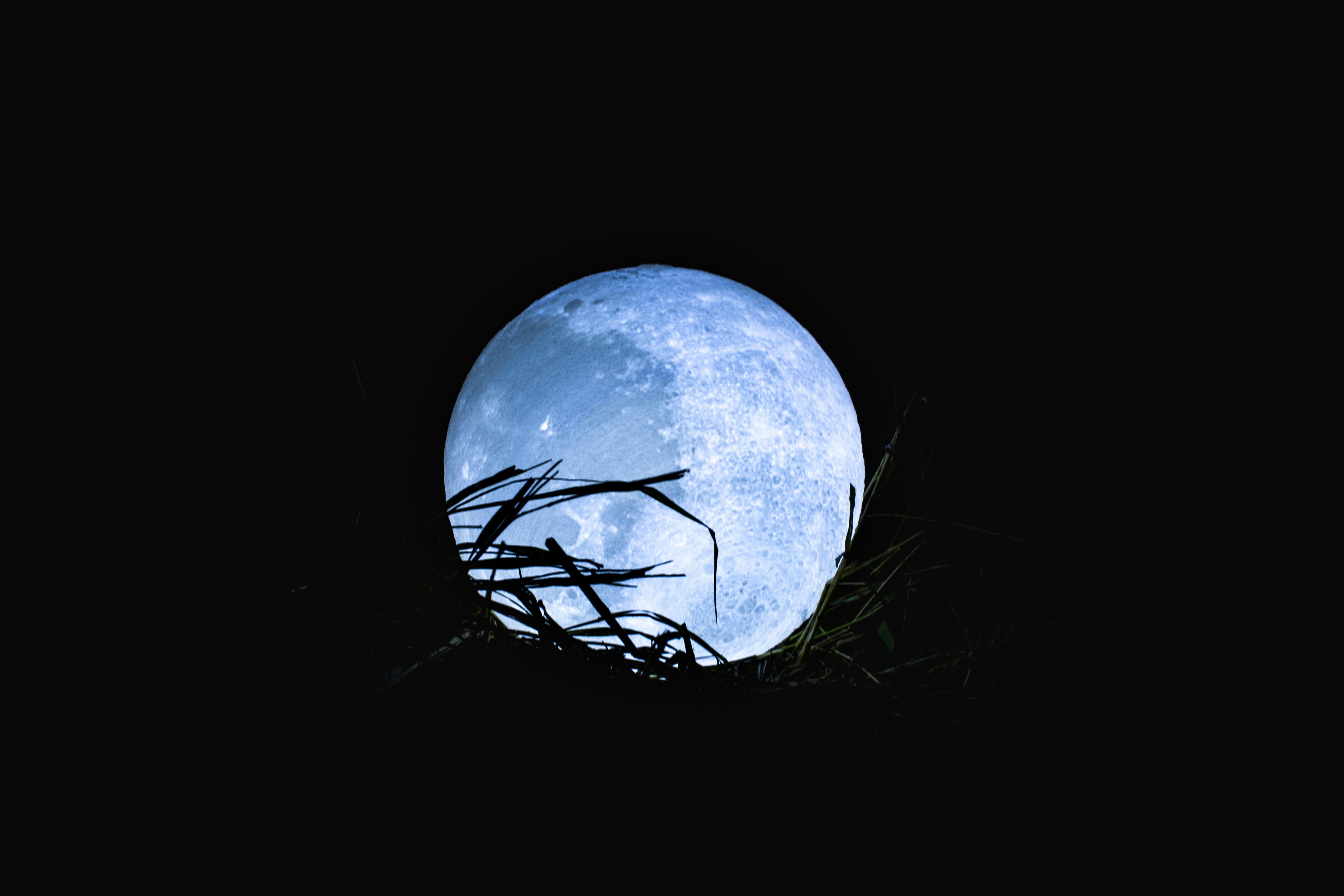
The next blue moon takes place on May 31st, 2026. But what exactly is a blue moon, and why does this particular full moon have such an unusual name? In today’s article, we’re going to explore where the term “blue moon” comes from and whether the Moon actually turns blue at all.
The Short Answer
Unfortunately, the moon doesn’t actually turn blue. And unlike the phrase ‘once in a blue moon’, they are fairly common in astronomical terms. Their uniqueness comes from the fact that they are an “extra” full moon occurring during an astronomical season. Typically, an astronomical season contains three full moons — in other words, every three months there are three full moons — however, due to the cycles of the Moon orbiting the Earth and the Earth orbiting the Sun, it sometimes works out that we get an extra full moon.
But you’re here to find out more, so let’s jump on it to find out…
What Is A Blue Moon?
Not Quite ‘Once In A Blue Moon’
Cultures all over the world give their full moons names. Take the month May as an example. It is called the Full Flower Moon to honour all the flowers blooming in spring. However, Native Americans called it Budding Moon, Egg Laying Moon, and Planting Moon. The Anglo-Saxon name is Milk Moon, while the Celtic and Old English names are Mothers’ Moon, Bright Moon, Hare Moon, and Grass Moon. These names helped different cultures track the seasons and changes in nature throughout the year.
The term “blue moon”, however, works a little differently. Despite being fairly common in astronomical terms, it is a name given to a specific full moon that doesn’t turn up as regularly as the other full moons.
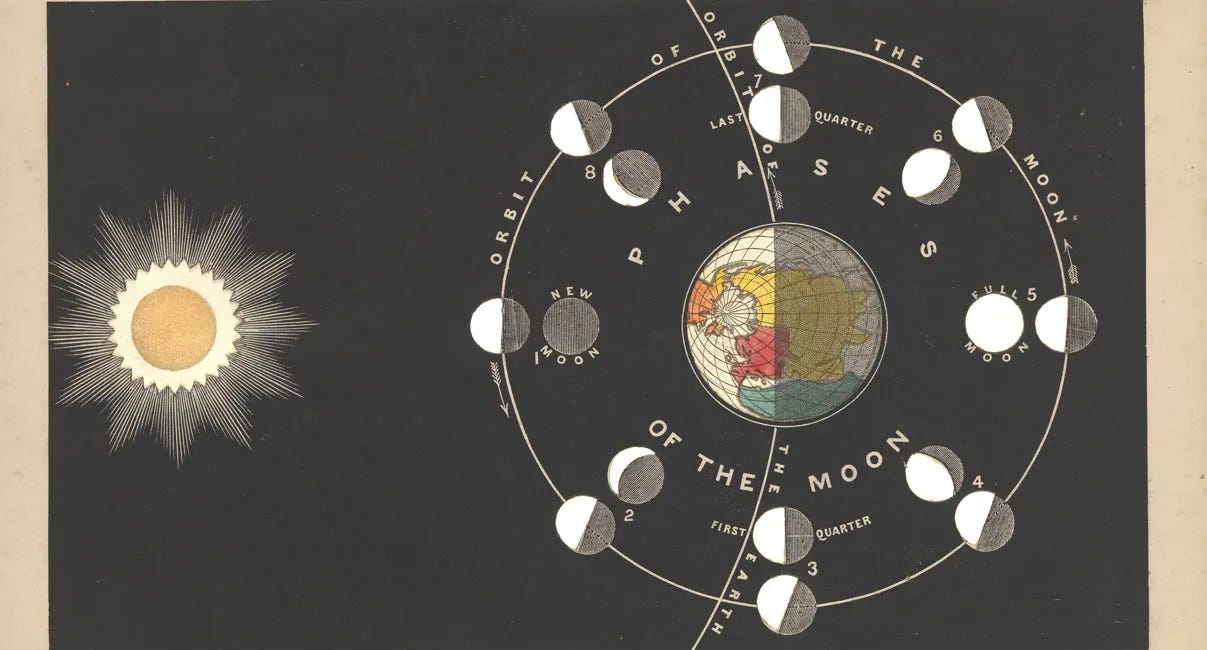
The lunar cycle lasts around 29.5 days, meaning that 12 lunar cycles add up to roughly 354 days. However, a year here on Earth is 365 or 366 days long. Because this is shorter than the calendar year, an “extra” full moon appears roughly every two to three years, which we call a blue moon.
The Definition(s)
Traditionally, astronomers defined a blue moon as the third full moon in an astronomical season containing four full moons. Where astronomical seasons are measured between equinoxes and solstices. Right now, we are in the spring astronomical season as we sit between the spring equinox and the summer solstice.
However, today many people use a different definition: the second full moon occurring within a single calendar month. This newer definition actually began because of a mistake in a magazine article published in the 1940s. The error spread over time and eventually became widely accepted in popular culture.
The Phrase Origin
The origin of the phrase ‘blue moon’ is unclear. One theory is that it comes from confusion between the Old English word “belewe”, meaning blue, and “balaewan”, meaning to betray.
The Visual Origin
Despite the Moon not actually turning blue during a Blue Full Moon, there are some cases where the Moon does appear to look blue, but only under certain atmospheric conditions. In events such as the volcanic eruptions of El Chichon in 1983 and Krakatoa in 1883, and large-scale fires such as in Sweden in 1950 and Canada in 1951, particles released into the atmosphere changed the way light travelled through the air. If enough of these particles are around 0.7 micrometres in size, they scatter red wavelengths of light more effectively while allowing blue light to pass through.
Similar to why the sky appears blue, the red wavelengths of moonlight become scattered. Leaving the blue light more visible and causes the Moon to appear blue in colour.
When Is The Next Blue Moon?
The next Blue Moon is on May 31st, 2026. However, it is fun to note that not everyone experiences the same number of full moons in the same way. Depending on your time zone, some regions may technically experience a full moon on a different calendar date from others.
The Takeaway
So, despite the Moon not actually being blue during a blue moon, blue moons are uncommon enough to feel special, appearing roughly every two to three years. When you look up at the sky around the 31st of May to see this seasonal blue moon, know that it is happening because of the intricate ways in which the Earth and Moon interact with one another.
Thanks for stopping by — hit reply and tell me what you’re curious about next!
If you enjoy my work and want to help keep these stories free for everyone, I’d appreciate your support at any level that feels comfortable:
💡 £1/month or £10/year - A small boost with a big impact.
🌱 £2/month or £20/year - Helping support free science content.
🔬 £3/month or £30/year - Investing in science communication.
🌍 £4/month or £40/year - Expanding science for everyone.
🚀 £5/month or £50/year - Powering independent science writing.
Everything I create will still stay free for everyone to read. Paid subscriptions simply help support the time, research, and work that goes into making science easier to understand and accessible to more people.
And honestly, just reading, sharing, or recommending Explain It All already means a lot.
Once in a blue moon, you come across a good Substack and this is one of them!
A fun article! I mentioned the blue moon in a note a while back as being rare, but you are right that on astronomical timescales it's not rare at all!