

Why Is Pi Found Everywhere In Physics?
Pi is found in many equations across science, but why is it so universal?
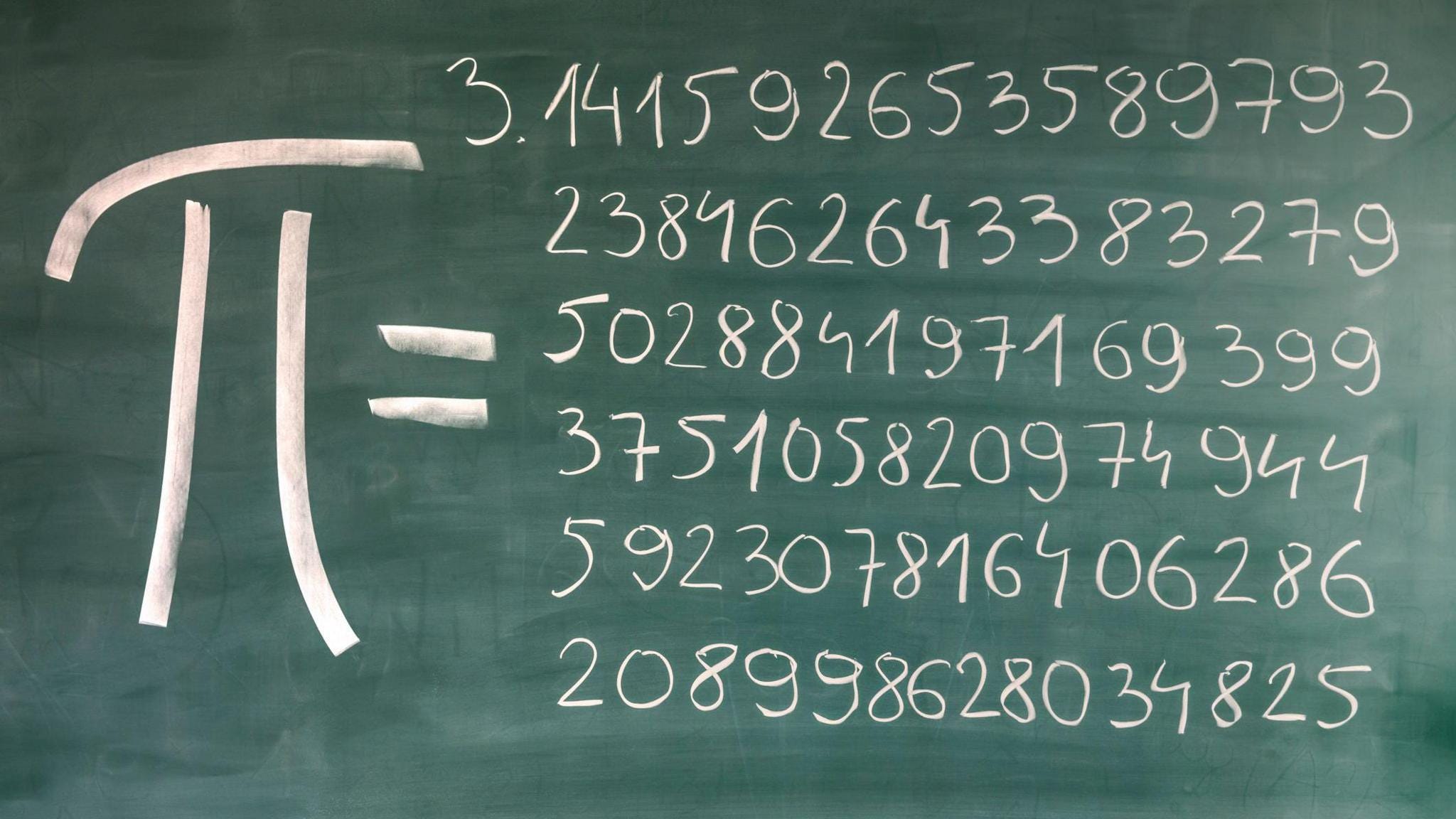
Most people meet π (pi) in school mathematics classes when learning about circles. And for those of us who have taken our STEM studies further, we have met it again and again, in everything from quantum mechanics to planetary motion. Pi shows up far beyond high school geometry. But why does this peculiar number appear in so many places? Today, we’re going to dive into why pi is found in so many places, and maybe even find a new way to understand physics.
The Short Answer
In short, as pi is the number which is the result of a circle’s circumference divided by its diameter, it appears everywhere because many natural systems involve circular or repeating patterns. These patterns usually come from three things: symmetry, waves and oscillations, and the geometry of circles and spheres. Because the mathematics of these systems is connected to circles, pi naturally appears in their equations.
Physics often describes nature using the simplest and most symmetrical mathematics available. But you’re here for a bit more than the simplest answer, so let’s expand on this short answer.
What Is Pi?
We might all know what a pie is, but what actually is pi?
Pi is defined as the ratio between a circle’s circumference and diameter.
This ratio is always the same, no matter how big or small the circle is. And gives us the approximate value of:
Plus a whole bunch of other numbers. In fact, the digits of pi continue forever without repeating. If you know them, pop them in the comments, and let us all know how you learnt them. Because I’m going to be honest with you, in astrophysics, we mostly use 3.14; the rest of the decimals are so small they don’t change things too much when working with such large scales.
Originally, pi came from circles, but mathematics later revealed something deeper. Circles are closely connected to waves, motion, and symmetry. Which means pi appears whenever those patterns appear.
On a quick history note, pi has been around for a long, long time. The ancient Babylonians and Egyptians approximated pi thousands of years ago. And around 250 BCE, Archimedes calculated it using polygons. Today, though we know pi as irrational, meaning its decimal expansion never ends.
Why Does Pi Appear Everywhere
So now we know what pi is, aside from the huge list of numbers most of us struggle to memorise, and its link to circles. We now want to figure out why pi will naturally appear in the mathematics of the universe.
Circle and spheres, as their 3D counterparts, appear so frequently in nature because they are highly symmetrical shapes, meaning they look the same from every direction. This symmetry makes them extremely common in natural systems, from systems as small as atoms to systems as large as planets and stars — and even in everyday things like bubbles, droplets of water, or ripples spreading across a point. Nature often forms circles or spheres because they distribute things evenly.
Circles are the most “perfect” 2D shape.
This symmetry means that, like in physics, where many things originate from a single point and spread outwards, such as the light from a star or even light from a simple lightbulb, when something spreads equally in all directions, the influence forms a sphere around the source. And spheres involve pi. As we can see from the surface area of a sphere given by the equation 4pir2. So when physicists calculate how forces or energy spread through space, pi naturally appears in the equations.
It works similarly for oscillations and waves. Many physical systems repeat or oscillate, such as a ball swinging on a string or sound waves. These repeating motions are described using sine and cosine waves — smooth repeating curves used to model oscillations. And those waves come from trigonometry, which is built on circles.
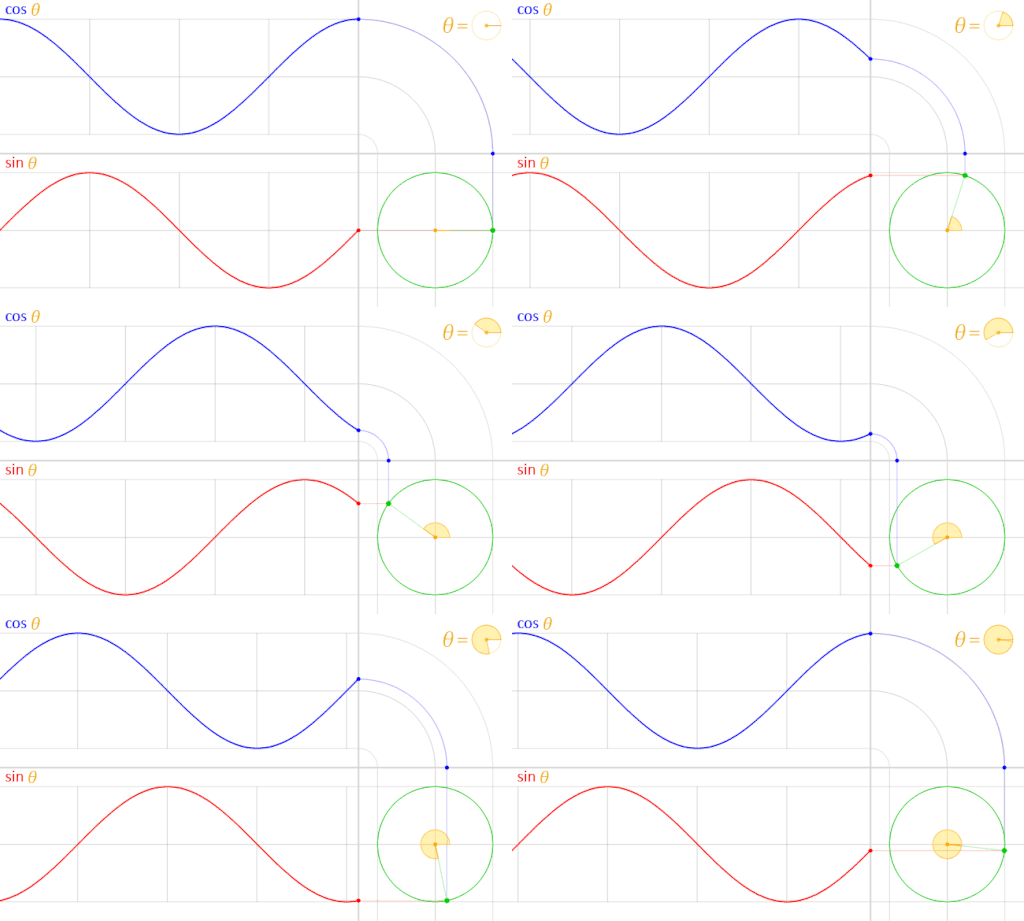
As you can see in the diagram, if you track a point moving around a circle, its vertical position forms a sine wave. So mathematically, the circle motion, sine wave and wave equations are all linked. Therefore, as waves are everywhere in physics, pi also appears everywhere too.
Even when nothing in the system looks circular, the underlying mathematics still is.
The Takeaway
So to sum it up, pi appears everywhere because the universe is full of circles, symmetry and waves, and pi is the number that naturally describes those patterns. What started as a simple ratio describing circles turned out to be a number that appears through the laws of nature.
From planets and waves to atoms and quantum physics, pi is woven into the mathematics that describes how the universe works.
Despite all that, hopefully, this article hasn’t sent you round in circles. And now you can go enjoy eating some pie. I quite fancy an apple pie after all this talk about pi.
Thanks for stopping by - hit reply and tell me what you’re curious about next!
So amazing, it's hard to wrap my mind around how people discovered this. Physicists and mathematicians are magicians!
The reframe that works here: pi isn't haunting physics from the outside. It's there because the universe has a deep preference for circular motion, waves, and symmetry, and pi is just what you're left with when you work out the math of those things. It makes pi feel less like a weird cosmic intruder and more like a predictable side effect (which probably disappoints people who enjoy the mystery, but I'm at peace with it). Also, publishing this on March 14th is either a very deliberate choice or evidence that the calendar itself understands the assignment.