

Why Is The Earth Habitable?
The Earth's location around the Sun and a whole lot of luck have made our home pretty livable.
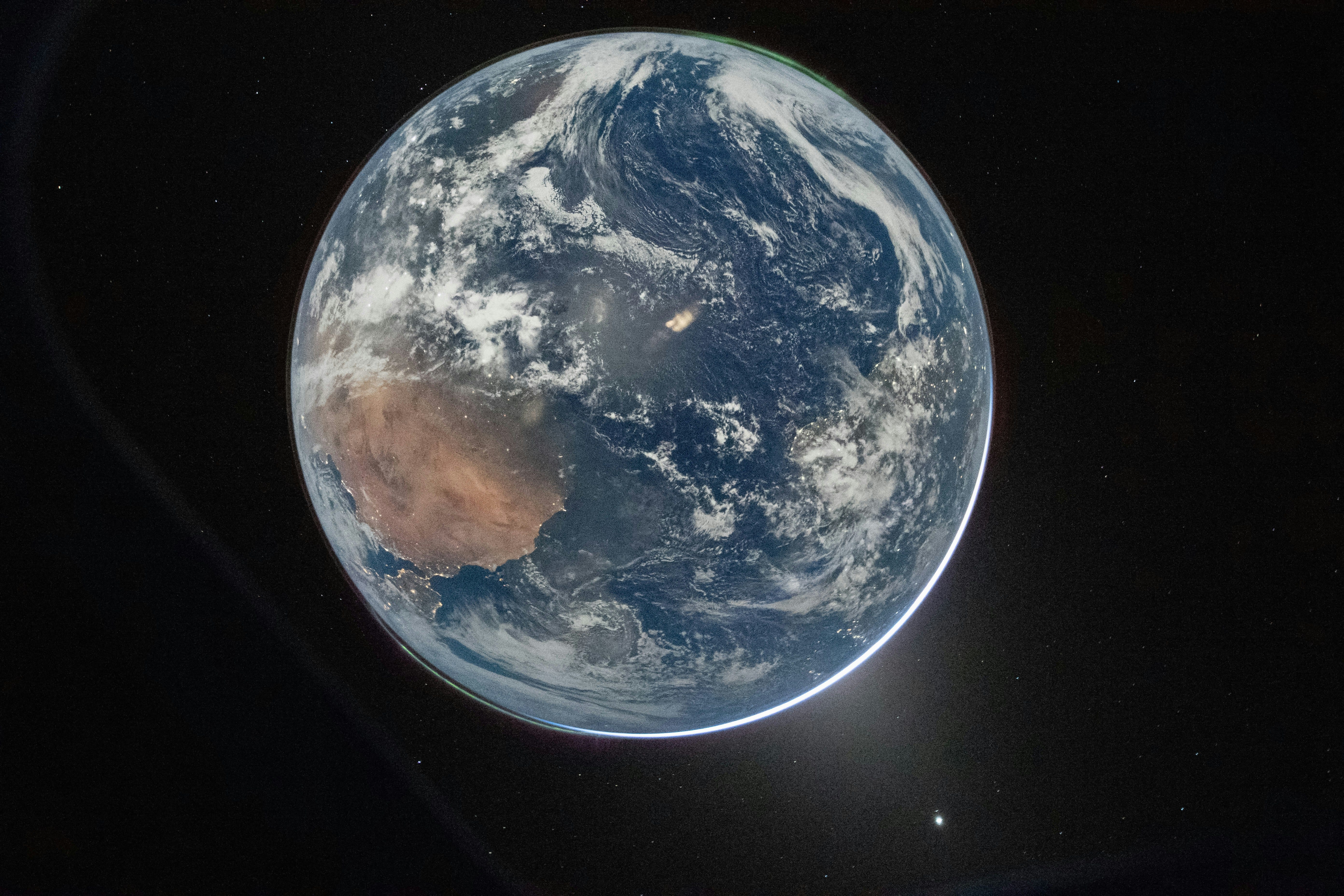
Have you ever wondered why, out of all the planets, moons, asteroids, and comets in our solar system, it’s only our planet Earth which can sustain life, at least as far as we know? We’ve lucked out on the perfect combination of the right quantity of life necessary ingredients and events that have led to you and me. We are already unique enough to have come from stardust, but why is the Earth habitable enough that those pieces of stars and the universe could come together to form something truly unique?
From the green grass under our feet, to the oxygen-filled air we breathe, our habitable Earth — in other words, one that can sustain life for a significant period of time — has come about thanks to a complex network of interactions among the planet, other planets in our solar system, and the star we orbit. The rest of today’s article is, therefore, going to be a look into everything that goes into making the Earth habitable.
The Short Answer
In short, it’s pretty much down to luck of being situated in something called the “Goldilocks Zone”. This is a specific area around a star that is the perfect distance from said star — in our case, the Sun. This means that in all the things we need, such as liquid water, a protective magnetic field, and an insulating atmosphere that provides essential gases, can exist in the perfect balance to make a place livable.
Additionally, the Earth lucked out with things like geological activity, which results in nutrients and carbon (an essential element to make you and me), being accessible to the planet’s surface.
This combination of factors is what distinguishes the Earth from other planets in our Solar System. So let’s dive deeper into them to find out what exactly makes the Earth habitable.
The Habitable Zone
A lot of the answers to the question of why the Earth is habitable? comes down to the Goldilocks Zone mentioned in The Short Answer. Or if we are calling it by its other name, the Habitable Zone!
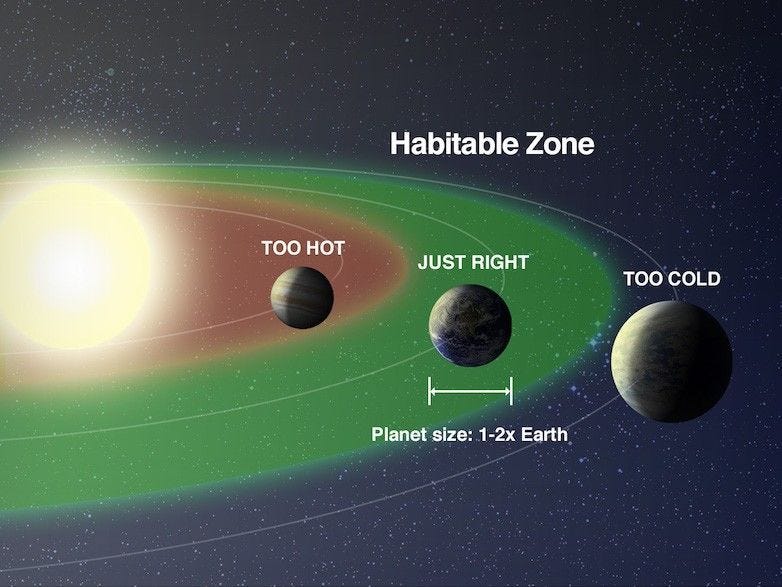
As the name suggests, this is a unique area around a star, for which scientists assume planets within it will be habitable, based on the evidence we have of our Earth and Solar System. As the name Goldilocks suggests, this region is not too cold, and not too hot either. So planets within it are far enough away from their star that water doesn’t boil away, but close enough to it that water also doesn’t freeze completely either. The energy from the star, together with the greenhouse effects generated by the planet’s atmosphere, produces a surface temperature between 0 °C and 100 °C (at standard pressure).
In our own Solar System, the habitable zone is generally estimated to extend from approximately 0.95 to 1.7 astronomical units (AU) from the Sun. Where 1 AU is the average distance from the Earth to the Sun — about 149,600,00 km (92,900,000 miles). However, for an exoplanet orbiting a cooler star, it has to be much closer than an exoplanet orbiting a hotter star for liquid water to exist. So the habitable zone isn’t fixed, it depends entirely on the star.
But why exactly is the habitable zone so important for life on Earth?
The Presence Of Liquid Water
Water is pretty important for life to exist, so the Earth being within the Sun’s habitable zone is a very good thing for us here on Earth.
Put simply, water is where life’s chemistry happens. It acts like a kind of mixing medium, allowing substances to dissolve, move around, and react with each other. This is essential for everything from breaking down nutrients to building the molecules that make up living things.
Water also helps move things to where they’re needed, transporting nutrients, chemicals, and heat around both our bodies and the planet. It even plays a role in regulating Earth’s climate through the carbon cycle, which acts a bit like a thermostat, helping keep temperatures stable over long periods of time.
On top of that, water has some slightly strange — but very useful — properties. For example, it expands when it freezes, which means ice floats and insulates the water below, helping aquatic life survive in cold conditions. It also takes a lot of energy to heat up or cool down, which helps prevent extreme temperature swings.
Overall, water does a lot of the behind-the-scenes work that makes life possible, so having it on Earth is a pretty big win when it comes to habitability.
An Atmosphere & Its Greenhouse Gases
But it’s not just the habitable zone that helps the Earth maintain liquid water on its surface. Atmospheric pressure and greenhouse gases also act as climate regulators that allow liquid water to exist. Thanks to greenhouse gases such as carbon dioxide, methane, and nitrous oxide that trap heat from the Earth’s surface, preventing it from escaping into space, the Earth’s surface maintains an average temperature of about 15 °C — roughly 33 °C warmer than it would be otherwise — preventing it from becoming an icy wasteland.
Additionally, the atmosphere protects the surface from dangerous UV radiation and smaller meteors by burning them up on their entry.
Our atmosphere is pretty cool. Composed mainly of nitrogen and oxygen, it holds these elements which we need to live. Nitrogen is needed to make DNA and RNA — the carriers of the genetic code for life on Earth — and oxygen is vital for the metabolic needs of complex life.
The atmosphere’s ability to maintain a balanced environment sets it apart from neighbouring planets.
The Magnetosphere
The atmosphere isn’t the only thing protecting Earth from space. The planet’s magnetic field plays a huge role, too. Generated by the movement of molten iron in Earth’s core, this magnetic field creates a protective bubble around the planet known as the magnetosphere.
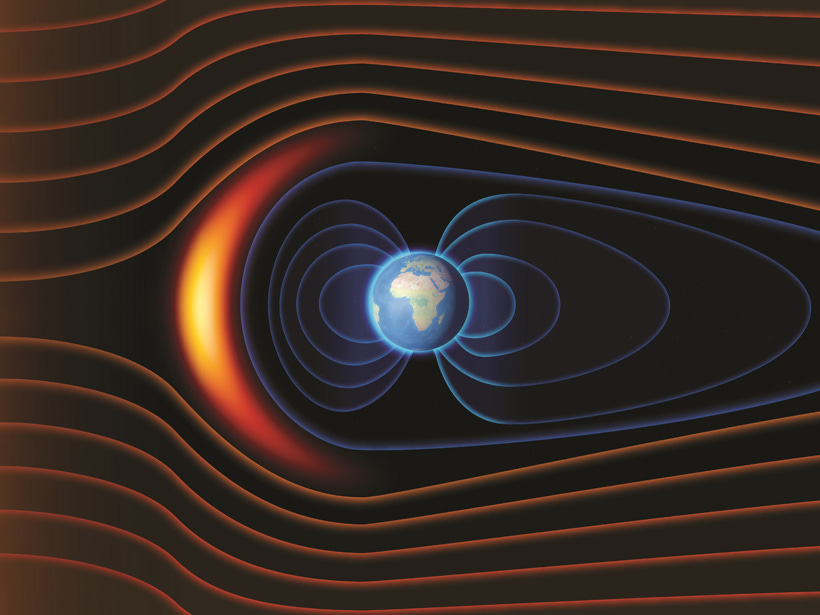
This acts like a shield against the solar wind (a stream of charged particles constantly flowing from the Sun). Without it, these particles would bombard the atmosphere and surface, increasing radiation levels and making it much harder for complex life to survive.
But the magnetosphere doesn’t just protect life directly; it also protects the atmosphere itself. By deflecting the solar wind, it prevents our atmosphere from being gradually stripped away into space. This helps Earth hold onto its air and water over long periods of time.
Geological Activity
Another key factor in climate stabilisation — and the Earth’s habitability — is geological activity. Plate tectonics and volcanic activity act as a kind of planetary recycling system, cycling carbon and nutrients between the deep interior and the surface.
As tectonic plates move, carbon is pulled into the mantle and later released through volcanic eruptions. This process helps regulate carbon dioxide (CO₂) levels in the atmosphere, maintaining a stable climate over billions of years. Volcanic activity also replenishes greenhouse gases, helping to keep the planet warm enough for liquid water to exist — without it, Earth could become far colder, as seen on Mars.
These processes are also linked to the Earth’s interior. The heat from the core drives geological activity and helps generate the magnetic field, connecting the systems that regulate climate and protect the planet. At the same time, this constant cycling ensures essential elements for life are brought to the surface, while others are recycled back into the interior.
And The Final Factor… Luck
Even with all the other factors we’ve covered today, from the habitable zone to volcanoes, having all of these things at just the right place in just the right amounts is rather fortunate — and really rather lucky.
We’re only a tiny planet in the middle of an enormous universe. So it’s pretty lucky to have enough of the right stuff to support a vast abundance of life.
The Takeaway
So what have we learnt today?
Our Earth needs a combination of things so that we can live on it, including: being the right distance from the Sun, having liquid water on the surface, being protected by a magnetic field, being kept cosy by an insulating atmosphere that provides essential gases, having an active geological interior, and, almost most importantly, a whole lot of luck.
It’s pretty wild but also pretty cool to think of all the things that have gone just right for you and me to be here today.
And honestly, when you lay it all out like this, Earth starts to feel less “ordinary planet” and more like a very rare cosmic coincidence.
But I think I’m pretty lucky to have you here with me today.
Thanks for stopping by — hit reply and tell me what you’re curious about next!