

How Long Could Humans Survive On Each Planet?
Earth is home, but could the human race survive anywhere else in our Solar System?
Earth is pretty habitable, as you can probably guess since you are here reading this Substack article. But have you ever wondered if we could survive on any of the other planets in our Solar System?
With goals of going back to the Moon and then reaching further into Space and heading to Mars, there have been many talks about where the human race could end up next. However, despite nowhere quite being like home, it is interesting to understand our neighbours and figure out how we could survive there. And really,
How long could humans survive on each planet?
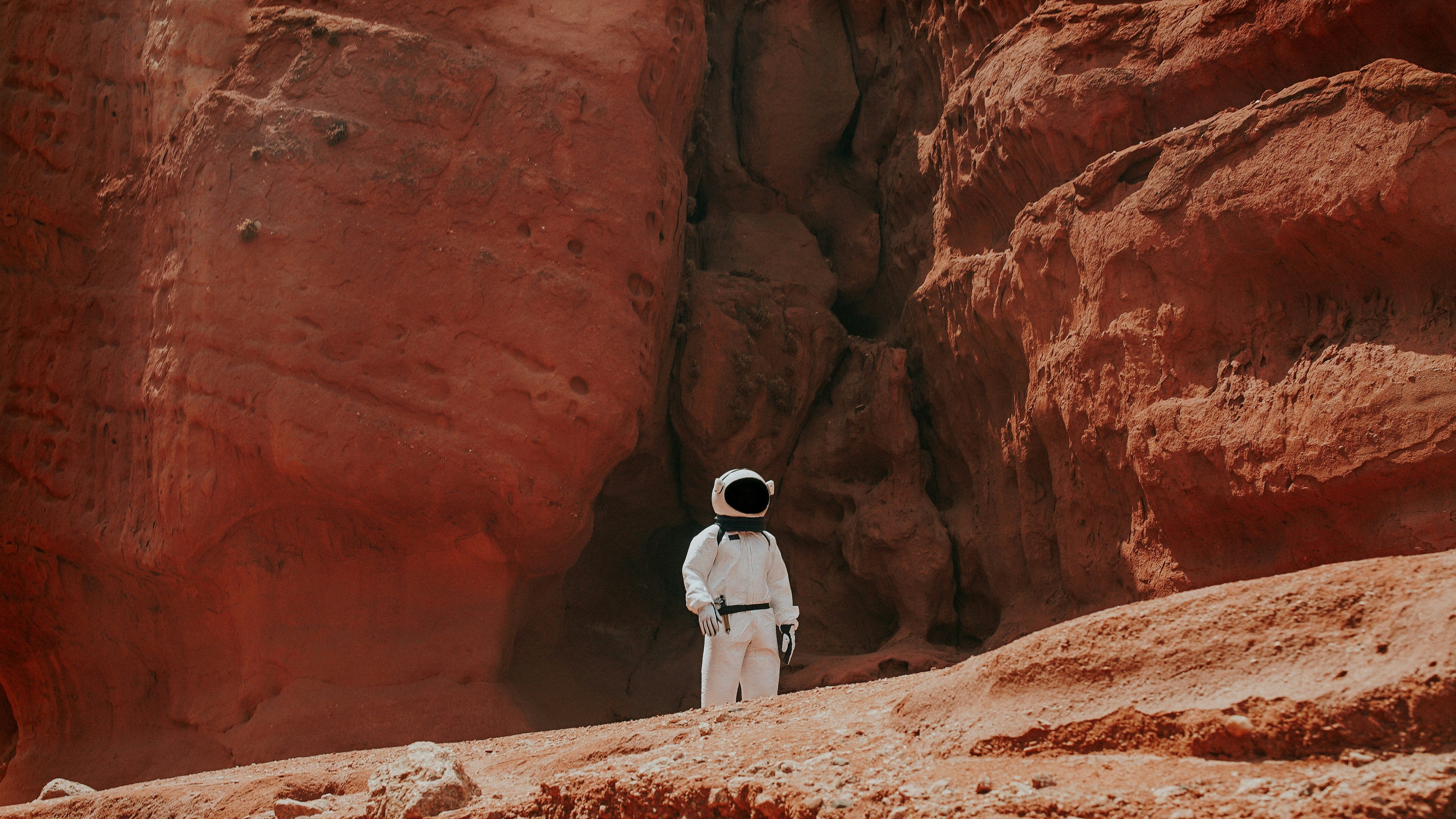
The Short Answer
Earth is really the only planet we can call home!
But if we really wanted to set foot on the other planets in our Solar System, could we even survive? Let’s jump in.
Mercury
Survival time: a few minutes without protection.
Mercury is the closest planet to the Sun at only 0.4 AUs (36 million miles, 58 million kilometres) and therefore is one of the hottest places to be. With one side — the day side — being a burning hot 430 degrees Celcius, and the other — the night side — being a freezing cold -180 degrees Celsius, neither side would really be suitable for us humans to live. (I barely coped with the 30 degrees Celsius temperatures we had the other week here in the UK, 430 sounds horrid.)
These extremely dangerous temperatures are also a result of Mercury having almost no atmosphere. Instead, it has a thin exosphere made up of atoms blasted off of the surface by solar winds and striking meteoroids. Without protection from Space, humans would quickly die from radiation and temperature exposure!
Venus
Survival time: less than 1 minute.
Despite being further away from the Sun than Mercury at 0.72 AU (67 million miles, 108 million kilometres), Venus is the hottest planet in the Solar System. With surface temperatures hot enough to melt lead at around 467 degrees Celsius, humans would not survive long at all.
The super-high temperatures are a result of the thick atmosphere on Venus. Filled with greenhouse gases like carbon dioxide that trap heat, Venus has a runaway greenhouse effect that is far worse than here on Earth. Add to that that the atmosphere creates the same force as if you were under 3000ft of water here on Earth; if the temperatures didn’t get you, the pressure would crush you.
Earth
Survival time: your entire lifetime!
Home sweet home. Earth is the only known planet where humans can naturally survive. We have oxygen, liquid water, and temperatures that support life! If you want to find out more about what makes the Earth the perfect human habitat, check out this previous article on “Why is the Earth Habitable?”

Mars
Survival time: around 1-2 minutes without a suit.
Mars is high up on the list of planets that humanity plans to reach and visit, but despite being one of our closest neighbours at 1.5 AUs, the conditions there are not suitable without a protective suit on. Temperatures might reach highs of 20 degrees Celsius, but also reach lows of -153 degrees Celsius. This is due to the very thin atmosphere Mars has, which results in heat from the Sun escaping back into space easily.
Despite it being freezing cold, there is water ice tapped under the polar surfaces, which makes it an ideal place to look into when thinking about where else humans could live. Though we would definitely need advanced suits and habitats to survive there.
Jupiter
Survival time: a few seconds.
Next, we move on to the first of our Solar System’s gas giants. At 5.2 AUs (484 million miles, 778 million kilometres), we’ve jumped quite the distance away from the Sun, making Jupiter a far colder planet for humans to survive on. However, it isn’t the cold that prevents us from surviving there; instead, it’s the lack of a solid surface! Jupiter is a giant ball of gas, mostly made of Hydrogen and Helium, like the Sun. And though the pressures of its atmosphere turn that gas into liquid, at the centre of the planet there is no surface for us to stand on — not great if you want to build a house. But the number one thing which makes Jupiter pretty uninhabitable for humans is the intense gravity and pressure that would crush a human almost instantly.
(It is fun to note, though, that the moons around Jupiter are a whole other story when it comes to being habitable, but that’s a story for a different article.)
Saturn
Survival time: a few seconds.
Saturn is another gas giant and is similar to Jupiter when it comes to human survival there. With powerful winds and extreme pressure ready to crush you, you’d barely survive a few seconds there. Let alone if you made it under the cloud layers, Saturn also has no true surface, so it wouldn’t make a great holiday location for humans.
Uranus
Survival time: seconds.
Survival times at the great distance of 19 AUs are seconds, if anything. Unlike the previous two planets, Uranus is one of the two ice giants in our Solar System. Not that it makes it any more survivable for us. With 80% of its mass consisting of “icy” materials such as water, methane, and ammonia. This freezing and toxic landscape would make survival for humans impossible there without protection.
Neptune
Survival time: seconds.
Neptune is similar to Uranus as our second ice giant planet, with the majority of its mass consisting of toxic gases, which make survival for humans impossible there. But if the gases and cold temperatures (Neptune is 30 AUs away from the Sun) don’t get you, the winds within Neptune will make you want to leave. Neptune has the fastest winds in the Solar System, whipping clouds of frozen methane at speeds up to 1,200 mph. To help you imagine how fast that is, the fastest winds on Earth are around 250 mph, and those are building-destroying kinds of speeds. So, Neptune’s winds would be a threat to us humans.
Pluto - Bonus dwarf planet
Survival time: less than 1 minute.
Whether you want Pluto to be a planet or not, depending on how you define a planet, let’s see if we could survive there. And unfortunately, it’s not very long. Pluto is incredibly cold and has almost no atmosphere to trap any heat, meaning humans would freeze and suffocate very quickly there. Located 39 AUs away from the Sun, so far that sunlight takes 5.5 hours to reach there, the temperatures get as cold as -226 to -240 degrees Celsius — cold enough that you get frozen methane gas. Not really sounding like a home away from home for the human race.
The Takeaway
So, to conclude, Earth is really the only place humanity is going to be able to call home in our Solar System, at least without technology and gear to protect us from hot temperatures, cold temperatures, pressure, radiation, and winds, to name a few.
So, for now I’m quite content to stay living here on Earth; how about you?
Thanks for stopping by — hit reply and tell me what you’re curious about next!
If you enjoy my work and want to help keep these stories free for everyone, I’d appreciate your support at any level that feels comfortable:
💡 £1/month or £10/year - A small boost with a big impact.
🌱 £2/month or £20/year - Helping support free science content.
🔬 £3/month or £30/year - Investing in science communication.
🌍 £4/month or £40/year - Expanding science for everyone.
🚀 £5/month or £50/year - Powering independent science writing.
Everything I create will still stay free for everyone to read. Paid subscriptions simply help support the time, research, and work that go into making science easier to understand and accessible to more people.
And honestly, just reading, sharing, or recommending Explain It All already means a lot.
The comparison of astronauts to explorers of the past is good, but to a point. While exploration in the age of sail was dangerous, lost sailors still had air to breathe, as well as opportunities for finding water and food. We don't have any of this in space. If something goes wrong, you die. Colonizing planets in space will be a lot harder than colonizing faraway lands on Earth.
do jupiters moons!